Leaving Secret City is a non-fiction narrative derived from memories, documents, photos, and whispered secrets. The memories are my own. The documents and photos come from various sources which I cite. The events related here are as factual as I can make them, but sprinkled here and there may be a few educated guesses. I will clue you in when that happens. As for what this website is "about," I will leave that for you to unravel. Navigation is a mix of conventional, unorthodox, and hidden. Good luck.
PAGES:
Saturday, November 20, 2021
Wednesday, June 30, 2021
Au Family Photos
![]() |
| Mary Elizabeth Au, circa 1908, Mansfield, Richland County, Ohio |
Wednesday, April 18, 2018
The Death of Max
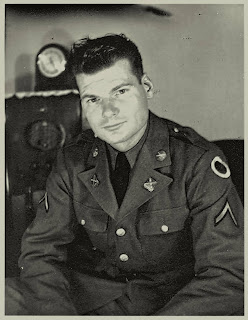
On 18 April 1978, I received a phone call from Dad. Uncle Max had killed himself. Earlier that morning, Max was to meet with attorney George Knell at the office of Knell & Freehafer before they would walk the short distance to the Richland County Courthouse. Some weeks before, Max's wife Mary had filed for divorce after enduring a thirty-year marriage that had produced no children and countless arguments. That morning the court would render the final verdict in the matter. When Max did not show up and did not answer repeated attempts to contact him by phone, the firm sent a young law clerk over to my Grandmother's house to find him.
![]() |
| Russell Maxton Case |
Max lived with Grandmother during the pendency of the divorce proceedings while Mary continued living in their marital home. Three days before that morning, Grandmother, and presumably Max, marked her 85th birthday. At her age, walking up and down the stairs had become difficult. So now she slept downstairs. Max slept alone on the second floor in a room Grandmother called "the boys' room." The reference was to Grandmother's brothers who had slept there as children. Her boys, save for Wendell, had never lived in that house. Nonetheless, the room's closets contained items that had belonged to them, brought there by Grandmother when she moved there after the war. Max's army uniform with his 37th "Buckeye" Infantry Division patch was among them.
The "boys' room" was my room during my summer stay there in 1956. As an eight-year-old, I regarded the uniform in the closet with reverence and awe. It was heavy and smelled of wool, and I viewed it as something of importance, something to be treasured. The shoes on the floor were still spit-shined. It was the uniform Max had on when he came home from the war. He wanted to look outstanding for his folks and Mary. In his letters home, he never described the war in the Pacific. During periods of combat operations when there was no time to write home, he would apologize for not having written sooner, adding, "we've all been pretty busy here lately." For his homecoming, he wanted to look his best, happy and in good health. Like a lot of GIs, he avoided talking about the war except in general terms. The details he kept locked up somewhere deep inside. Twenty-eight-year-old Russell Maxton Case, who walked off the ramp of the USS General William Mitchell onto the streets of San Fransisco on Thursday, 6 December 1945, was not the same lad drafted into the Ohio National Guard in 1941.
When the law clerk arrived, he stood at the bottom of the stairs and called out to Max several times. When he got no reply, he climbed the stairs and entered the "boys' room." Scattered on Max's bed and the surrounding floor were tens of thousands of dollars. The money was Max's life savings, which he had withdrawn from his savings account the day before. Max lay face-up on the bed, amid the cash, in a pool of blood. He had been a parole officer and owned a snub-nosed revolver. Earlier that morning, Max had pressed its muzzle beneath his lower jaw, pointing upward through his head, and pulled the trigger.When the law clerk discovered the scene, he ran downstairs and called for an ambulance. Soon after, the ambulance arrived, as did the police. The ambulance attendants removed Max's body, the police took possession of the pistol, spent bullet casing, and cash, and everybody left the blood-soaked bedding for Grandmother.
Back at the courthouse, everything had changed. Mary was no longer Max's wife; she was his widow. The court dismissed the divorce case. I suppose that the cash removed by the police was eventually turned over to Mary, or paid into his estate, pending administration. The same for the pistol.
Dad and I arrived at Grandmother's house the following day. We found her alone, seated in a chair at the kitchen table, weeping. Too weak to climb the stairs, she never saw the scene that greeted the law clerk. She just waited for us to come up from Tennessee. We tried to comfort her and listened to her account of what happened. She thought she heard a noise upstairs but was unsure since she was so hard of hearing. She did not realize it was a pistol shot. When the law clerk arrived, she told him to go upstairs for Max since they needed to hurry. She had no clue that anything was wrong until the law clerk came running down the stairs.
After talking with Grandmother, Dad and I climbed the narrow staircase to the second floor. Neither of us said anything on the way up. Filled with dread at what we would see, we nevertheless walked straight into the "boy's room" as soon as we reached the top of the stairs. It was worse than I expected. The blood where Max's head lay as he fell back on the bed was not merely a stain. Instead, it was a thick coagulated puddle that soaked through the sheet to the mattress below, a sight that I will never forget. It was not entirely smooth. It contained some small lumps here and there. Perhaps bits of skull and brain. I did not look closely to find out because I didn't want to know. I felt like I was looking at something too personal. Too private. Something that belonged to Max and was not for me to see. It is difficult to explain my feelings at the moment.
My father and I stripped the sheets and pillowcases off the bed and lay them bundled up on the floor, with the bloodiest areas in the middle of the bundle. We did this so Grandmother would not see the blood when we took the sheets downstairs. Beneath the sheets, the mattress had a large stain where blood had soaked through the sheet. We called out to Grandmother to please leave the kitchen and sit in the dining room for a few minutes. We wrestled the cumbersome mattress down the narrow stairs and through the kitchen to the back porch when she did so. We hesitated there a moment to catch our breath and readjust our grip. Then we carried it across the driveway out to the garden. We went back upstairs and brought down the lower mattress, then the pillows and bundled sheets. We placed everything in a pile on the first mattress. In the garage, we found rakes and a can of gasoline. We soaked the bedding with the gas and set it alight.
It took a while to burn and needed constant raking to keep the fire from dying out. In about a half-hour, it was all just a smoldering pile of ashes. We worked in outward silence. We didn't discuss Max or Grandmother. We just went about our task solemnly, reverentially. The only sounds were the crackle of the flames and the scraping of the rakes. Yet, our minds were not silent. At least, not mine. I thought of Max, Grandmother, Dad, and Mary. I struggled to understand how things got to this point. It was all an immense gray sadness. I knew that trips to Ohio would never be the same again. The happiness died with Max.
Thursday, December 15, 2016
Dad's Toys - Nuclear Bomb Effects Computer
The instructions state..."as a convenience to those interested in the effects of nuclear weapons, this circular computer was designed to make data easily available on various weapon effects - some as functions of both yield and range and others on yield alone...". And who would not want to know all that, right?
|
| Nuclear Bomb Effects Computer - Front |
|
| Nuclear Bomb Effects Computer - Rear |
These devices turn up regularly on eBay, although they can be a bit pricey. You can always Build Your Own Nuclear Bomb Effects Computer for a pittance.
The gadget found its way into the movies in the 1964 film Dr. Strangelove or: How I Learned to Stop Worrying and Love the Bomb.
Saturday, July 2, 2016
1947-11-07 - "Baby Boy Case"
![]() |
| Oak Ridge Hospital circa 1945. Photograph by Ed Westcott. |
I was born at a very early age on November 7, 1947, in the maternity ward of the Oak Ridge Hospital, Oak Ridge, Tennessee.
Oak Ridge is sometimes called the "Secret City". There are many reasons for this which I will tell you about in the future, when we are both older and wiser. For now though I just want to tell you about my birth. Not because it was so remarkable, but because it seems like a good place to begin. The stories I will tell you will not all be about me. But my story is the story I know best so we might as well start there.![]() |
| 1947 "film noir" movie poster. |
![]() |
| Exhibit "A" |
![]() |
| "Baby Boy Case" |
![]() |
| Claudy, er, uh, I mean, "Claudia" F. Osborn. |
The photo was taken in the living room of a duplex at 205 Vermont Avenue, Oak Ridge, Tennessee. That is where I lived for the first three years of my life. I don't remember much about those years so they must have been pretty uneventful...at least for me. Incredibly I do remember two things from those years which I will tell you about in a later post. I will also tell you more about my mom and dad. But you can already learn a few things about them by taking a close look at the birth certificate. Let's see how well you do. Here is a quiz:
- What did the "F" in my mother's name stand for?
- What color or race was she?
- Where was she born?
- What was her usual occupation?
- How many months had my mom been pregnant when I was born?
- What does the birth certificate say about my dad?
One more task for you...find "Vermont Ave., Oak Ridge, Tennessee" on a google map. Our duplex at 205 Vermont Ave is not there anymore. In fact almost all of the duplex apartments in that part of town are gone now. If you look closely at the picture of the hospital you can see that at one time there were them. Our duplex was right across the street from the present day Family Clinic of Oak Ridge and just a couple of blocks from the hospital. As you can see, I was born very close to my first home.
Thursday, June 1, 2000
The Letter
As I have described in earlier posts, one of my great joys in life was rummaging through the closets, cabinets, and drawers at Grandmother's house in search of old photos, letters, curiosities, and other family treasures. It was on one such exercise in bedroom archeology that I unearthed one letter in particular that caught my eye. It was from Dad, addressed to his parents, and begins like this:
"Dear Mom and Dad,
Now I can explain what all the secrecy has been about the last few months. His name is Davy and he was born on November 7th. His mother's name is Claudia."
I was surprised to see that the letter was about Mom and I. But why the secrecy? Puzzled, I keep reading until I come to this line:
"I fear that she is not long for this world, as she has had heavy exposure...".
At once my attention shifts from the "secrecy" part to Mom. I was just a kid, true, but I was an Oak Ridge kid. I knew what the troubling phrase "heavy exposure" meant. I remember what went through my mind as I stared at the letter in my hands:
I'm worried.
Is Mom going to be ok?
Maybe Dad is wrong.
Mom is fine.
She has always been fine.
The letter is from a long time ago, ten years or more.
Yeah, Mom is fine.
Dad was wrong.
I did not mention the letter to anyone. I did not want anyone to know that I had read a secret letter.
I found the letter in the early 1960s. I was in my early teens. Mom was in her early thirties.
~~~
Less than ten years later Mom is not fine anymore. Uterine cancer is trying to kill her. Doctors intervene. Surgeons remove the affected tissue with an abdominal hysterectomy. Radiation therapy appears to stop the cancer from spreading. Mom lives cancer-free for thirteen more years.
~~~
In the fall of 1979, a new cancer appears. It is swift, aggressive, and lethal. This time the cancer wins. Mom is fifty-three years old when she dies.
~~~
Mom's dad died at age 71. Her mother died at age 87. Of her nine brothers and sisters, five died in the eighties, three died in their seventies, and one died at age 59. Of her four grandparents, two died in their eighties, one died in her seventies, and one died at age 61. Mom's death at age fifty-three was not typical for her family.
In the days surrounding her illness and death I wondered why she was taken from us so young. I remembered Dad's letter. Was he right? Was Mom's cancer related to her work at Y-12? I did not bring up the secret letter. Doing so would not bring Mom back. I let it go. With time I forgot it completely.
Wednesday, May 31, 2000
The Cellar
The cellar is the space I spent the least amount of time in for several reasons. First off, the cellar was very dark. Especially when the lights were off. Secondly, the steps going down into the cellar had a handrail along the wall, but not along the open side. At least that is how I remember it. I could be wrong about that. Nevertheless, for that reason or another the steps were deemed a bit precarious. Everybody who was older than me, which was everybody, advised me to take much care when descending the steps, but really preferred that I not go there at all. Of course, from my perspective, that was all the more reason to go there.
Turning on the light switch helped the visibility situation, but only a little. Peering down into the murk of the dimly lit cellar from the top of the steps left me with a certain sense of awe, foreboding, and curiosity. I was pretty sure that somewhere down there among the lumps of coal and the many shelves of empty mason jars there was treasure to be found. With a firm grip on the handrail with my left hand, and uncle Wendell's flashlight in my right hand, I began my descent. Upon reaching the bottom, but before stepping away from the security of the steps, I traversed the flashlight from left to right, and back again. I discerned various objects and spaces that with out the help of the flashlight had been invisible from the top of the steps.
It was a strange world, and an odoriferous one at that. Not stinky mind you, but different, odd, unlike the smell of the world above. It was a mixture of mold, coal dust, and just plain old age. In other words, it smelled of adventure. Cautiously I stepped away from the steps onto the cellar floor which crunched beneath my sneakers, the result of eighty years of grit and insect exoskeleton accumulation.
I moved towards a bit of light coming from the narrow spaces around the outside cellar doors. I tried to imagine what it would be like down here during a tornado like the one that carried Dorothy away in the Wizard of Oz. Mom had told me about tornados in Alabama and they sounded really scary. I wondered if they had tornados in Ohio too*. I pushed on the doors to see how sturdy they were. I concluded that they would blow away like the leaves from the big tree in the back yard, letting me or anyone else down here to be sucked out by a big tornado like bug beneath a Hoover. I moved on.
Holding the flashlight at the ready like a club in case any critter hiding in some dark corner should suddenly jump out at me, I slowly circumnavigated the perimeter of the "cave". Of the gazillions of Mason Jars, none had anything in them but dust and spider webs. You would think that at one or two of them would have contained a treasure map, a secret message, or at least some explosive powder**. Ultimately the only object of any real interest was the coal furnace. Since it was summer, it wasn't running. But I remembered hearing its comforting rumble in the winter months as warm air came up through the floor vents in the parlor. I had never seen it up close before. It reminded me of a dirty, rusty, alien robot. Uncle Wendell's shovel was nearby next to a pile of coal. On really cold winter nights Wendell would have to crawl out of his bed on the second floor, make his way to the cellar, a shovel more coal into the gaping mouth of the beast while the rest of us snuggled deeper into our warm wool blankets. He deserved some kind of medal for that.
I have never forgotten my few explorations of the cellar and the mason jars, the furnace, and the pile of coal. Most of all, I can never think about the cellar without thinking about Wendell.
|
| Ernest Wendell Case, Claudia Osborn Case, William David Case, circa 1948. Norris Dam in the background. |
*In 1965, nine years after I pondered these matters, Mansfield was hit by a large tornado causing 30 injuries and 4 deaths.
**Not entirely a random thought with no basis for bubbling up from the depths of my eight year old subconscious. I was well aware after all, of my uncles' post adolescent fondness for explosives and Wendell's catastrophic accident.
Monday, May 1, 2000
Dad's Toys - Geiger Counter
One day Dad came home from work toting a Geiger Counter. I do not remember the gadget in great detail, but it did have earphones and a wand, similar to the one in the photo.
I'm told that Dad and another fellow, a co-worker from the lab I suppose, used to prospect for uranium in the hills of East Tennessee by driving around the countryside holding the wand out of the car window. As far as I know, they never found any promising sites.
One summer, Dad brought the device along on a family trip to Ohio. Sitting in the back seat of our car, I held the wand out the window for hours, prospecting for uranium. Occasionally the needle on the dial would suddenly jump to the right and the clicking in the earphones would get louder and faster. Excited, I would immediately notify Dad. His response was always "Oh, ok", or words to that effect, and kept on driving. He never stopped to investigate further. I guess he wasn't really interested in prospecting for uranium.
|
| A vintage Detectron DG-7geiger counter. Circa 1953. |
Wednesday, September 15, 1999
Madame Williams
![]() | ||
|
Towards that end the school system had found the perfect teacher/performer/playmate for the job. "Madame Williams" was none other than Blanche Legereau, who as a child performer, had toured the world with the Sarah Bernhardt Troupe for seven years until the death of "Madame Sarah" in 1923.
Mme. Williams never simply walked into our classroom. Oh non non! Rather, she would make a grand entrance as she burst through the door, a human whirlwind of beads, scarves, perfume, and joie de vivre.
"Bonjour mes petits chéris, vous allez bien ?" she would announce in a loud voice, trained no doubt by Madame Bernhardt to carry to the last row in a large theater. I'm sure Mr. Maxwell, our school principal heard her through the closed door of his office at the far end of the building. Then as she scooped us up out of our chairs, crushing us with embraces and kisses as she flourished her beads and scarves, she would lead us in singing...
Sur le Pont d'Avignon
On y danse, On y danse
Sur le Pont d'Avignon
On y danse tous en rond.
On an imaginary bridge the boys would deeply bow to the girls as we sang...
Les beaux messieurs font comme ça
Et puis encore comme ça.
And as they curtsied they girls would reciprocate with...
Les belles dames font comme ça
Et puis encore comme ça.
And so it would go for the next 45 minutes or so until, just as dramatically as she had entered, Mme. Williams would take her leave and vanish down the hall to the next "class". I felt sorry for our teacher Mrs. Dougher, who had to re-establish order in the classroom. Mme. Williams was a very hard act to follow indeed.
Unfortunately, when I moved on to more traditional foreign language classes I discovered that none of the "real" language teachers (bless their academic hearts) could hold a candle to Mme. Williams. I did poorly. So poorly in fact, that my Seventh Grade French teacher advised me that since I obviously had no aptitude for foreign languages I should abandon her class and take auto mechanics instead while there was still time for me to learn something that I could use in life. I ignored her advice, preferring to remain in her class, among my friends, rather than risk an uncertain fate among the cigarette smoking, grease-stained troglodytes who inhabited the auto mechanics building.
In those days movies about ancient Rome were popular: Quo Vadis in 1951, The Robe in 1953, Ben Hur in 1959, Spartacus in 1960, and Cleopatra in 1963. So when I entered Oak Ridge High School in 1964 and discovered that the language of Julius Caesar was a choice I signed up for Latin 1 where I had better luck than with French. But only barely. I was now a "C" student rather than a "D" student. I will spare you the details. Suffice it to say that being constantly tormented by the two-bit bully who sat behind me made it difficult to concentrate on mastering the complexities of Latin declensions. Eventually I would take care of the bully, but that is another story for another time. By then I had already had "the Great Awakening".
Saturday, March 18, 1989
Infantile Amnesia
![]() |
The memory goes like this:
I am very young, and I am in the car with my parents. Dad is driving. We come to a place that is familiar. There are small buildings on either side of the road. The car slows, then comes to a stop. Sometimes there are other cars there too. Sometimes not.
This has happened before and it is always like this. Dad rolls down his window, and as he does so as a man approaches the car and peers inside. They exchange some words. Then the man goes away and Dad drives on. The whole encounter lasts no more than twenty seconds.
We are not supposed to remember events from very early in our childhood due to infantile amnesia. Nonetheless this ritual happened so often I can still see it in my mind. It is not my only memory from that time. The Elza Gate photo by Ed Wescott is dated 25 Feb 1949. Less than one month later, on 19 Mar 1949, the gates at Oak Ridge are opened to the public. On that date I was 1 year, 4 months, and 12 days old.


